Veneers

Veneers
Transform Your Smile.

Porcelain and composite veneers — what they achieve, the differences, the process, and realistic 2026 South African cost estimates so you can plan with confidence.

A Powerful, Permanent Smile Change

Veneers are one of the most transformative tools in cosmetic dentistry, capable of changing the colour, shape, size and alignment of your teeth in one coordinated treatment. They're also a long-term commitment — placing porcelain veneers usually means permanently removing a thin layer of enamel. Below is what you need to know, including realistic 2026 cost estimates for South Africa.

Preparation is permanent Porcelain lasts 10–15+ years Composite lasts 5–7 years Choose natural over dramatic

Estimated Costs in South Africa (2026)

Indicative ranges only — actual prices vary by dentist, lab, location and case complexity. Always get a written quote after a consultation. Premium practitioners and complex cases can exceed the upper ends shown.

Porcelain Veneers

Per tooth R4,000 – R8,000
Full smile (6 teeth) R24,000 – R50,000+
Typical lifespan 10–15+ years
  • Custom-made in a dental lab — the most natural look
  • Highly stain-resistant; keeps its shade for years
  • Requires a thin layer of enamel preparation
  • Premium cases can reach R10,000–R12,000+ per tooth

Composite Veneers

Per tooth R1,500 – R4,000
Full smile (6 teeth) R9,000 – R24,000
Typical lifespan 5–7 years
  • Sculpted directly by the dentist, usually one visit
  • Minimal or no tooth preparation — more conservative
  • Repairable and easy to upgrade to porcelain later
  • Stains more easily from tea, coffee, wine and smoking

Additional Costs to Budget For

Consultation & planning

Often credited toward treatment

R500 – R1,500

Digital smile design / mock-up

Sometimes included in package

R1,500 – R3,500

Night guard (for grinders)

Essential to protect your investment

R1,500 – R3,500

X-rays & pre-treatment cleaning

Required before cosmetic work

R900 – R2,500

What Affects the Cost

  • Material — porcelain costs more than composite, but lasts far longer.
  • Dentist's experience — cosmetic specialists charge more for artistry and planning.
  • Lab quality — premium dental labs produce more natural, durable veneers.
  • Number of teeth — the 'smile zone' (6–8 visible teeth) is the common scope.
  • Preparation type — no-prep/minimal-prep can cost a little less and preserve enamel.
  • Location — Gauteng and the Western Cape typically sit at the higher end of ranges.

Cost & Value Notes

  • Medical aid rarely covers cosmetic veneers — budget out of pocket.
  • Many practices offer payment plans for full-smile work.
  • Treating only the visible 'smile zone' (6 teeth) keeps cost manageable.
  • Composite is a lower-cost stepping stone — upgradeable to porcelain later.
  • Porcelain costs more upfront but replaces less often — better value over 10+ years.
  • Beware unusually cheap quotes — they often cut corners on planning, labs or materials.

The Veneer Guide

What Veneers Do

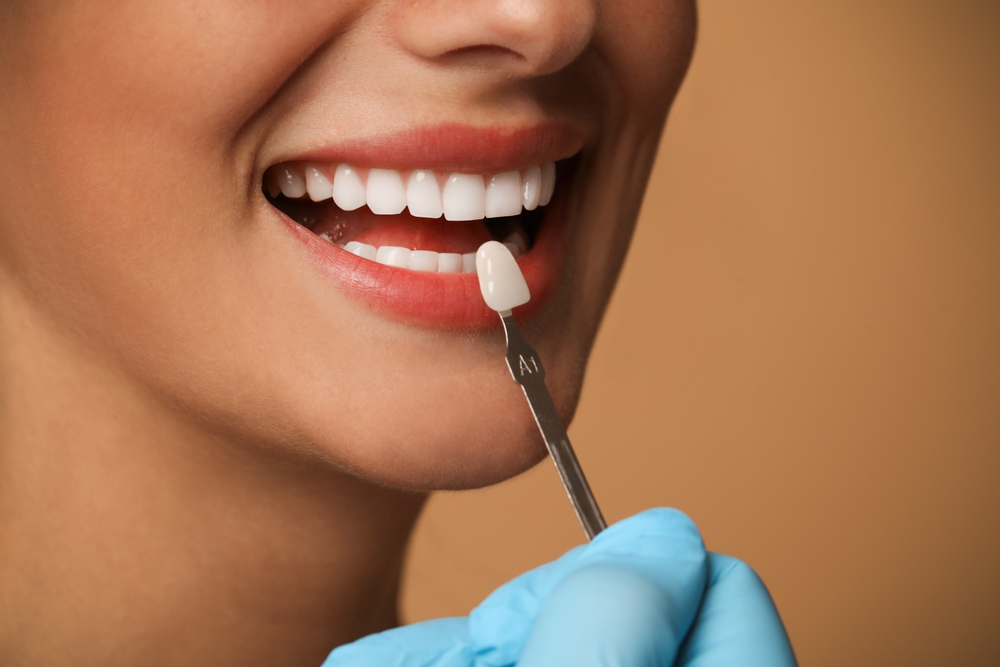
Veneers are thin shells bonded to the front of the teeth to transform their colour, shape, size and alignment. They're one of the most powerful tools in cosmetic dentistry, capable of a complete smile change. Because placing veneers usually involves permanently altering the teeth, the decision deserves careful thought and a skilled dentist.

What Veneers Can Correct

Veneers address a wide range of cosmetic concerns:

  • Discolouration that whitening can't fix.
  • Chipped or worn teeth.
  • Gaps between teeth.
  • Mild misalignment and uneven shapes.
  • Teeth that are too small or irregular.

The Process

Porcelain veneers take 2–3 visits: consultation and planning, minimal tooth preparation (removing a thin layer of enamel) and impressions, then bonding the lab-made veneers. Some modern 'no-prep' or minimal-prep veneers preserve more tooth structure. Composite veneers are often done in a single visit. The preparation is permanent — once you have veneers, you'll always need veneers.

Candidacy

Good candidates have healthy teeth and gums, sufficient enamel, realistic expectations and a stable bite. Veneers aren't suitable for heavy grinders (without a night guard), severely decayed or weak teeth, or significant bite problems that need orthodontics first. A thorough assessment determines whether veneers are the right solution for you.

Care and Longevity

Veneers last many years with care:

  • Excellent oral hygiene — brush, floss, regular check-ups.
  • Wear a night guard if you grind.
  • Avoid biting hard objects (ice, pens, nuts in shells).
  • Porcelain resists staining; composite needs more care with tea, coffee and wine.
  • They won't last forever — plan for replacement eventually.

Risks and Considerations

The main commitment is permanence — tooth preparation can't be undone. Veneers can chip, debond or, rarely, cause sensitivity. Mismatched or over-white veneers look unnatural; communicate your preferences clearly. This is a long-term investment in your smile, not a reversible cosmetic tweak.

Choosing a Dentist

Veneers are as much artistry as dentistry. Look for a dentist with specific cosmetic training, a strong before/after portfolio (including natural-looking results, not uniform 'chiclet' teeth), and a willingness to plan conservatively. Digital smile design lets you preview the result before any preparation.

A Final Word

Veneers can deliver a transformed, confident smile that lasts for years. Choose an experienced cosmetic dentist, plan conservatively, and go for natural over dramatic — your smile should look like the best version of you, not someone else's.
Find a Pro

Find a Cosmetic Dentist

Veneers are permanent — choose an HPCSA-registered dentist with cosmetic training and a natural-looking portfolio. Get a written quote after a consultation.

Browse Professionals