Thyroid Hormones

Thyroid Hormones.
Your Metabolic Engine.

T3 and T4 regulate every cell in your body — and undiagnosed thyroid disorders in men can suppress testosterone, drive fatigue, weight gain and low mood.

T3 (triiodothyronine) & T4 (thyroxine)
Regulate metabolism & energy production
Affects testosterone conversion & libido
Hashimoto's also affects men
Often missed in male patients
TSH is the key screening test

What Are Thyroid Hormones?

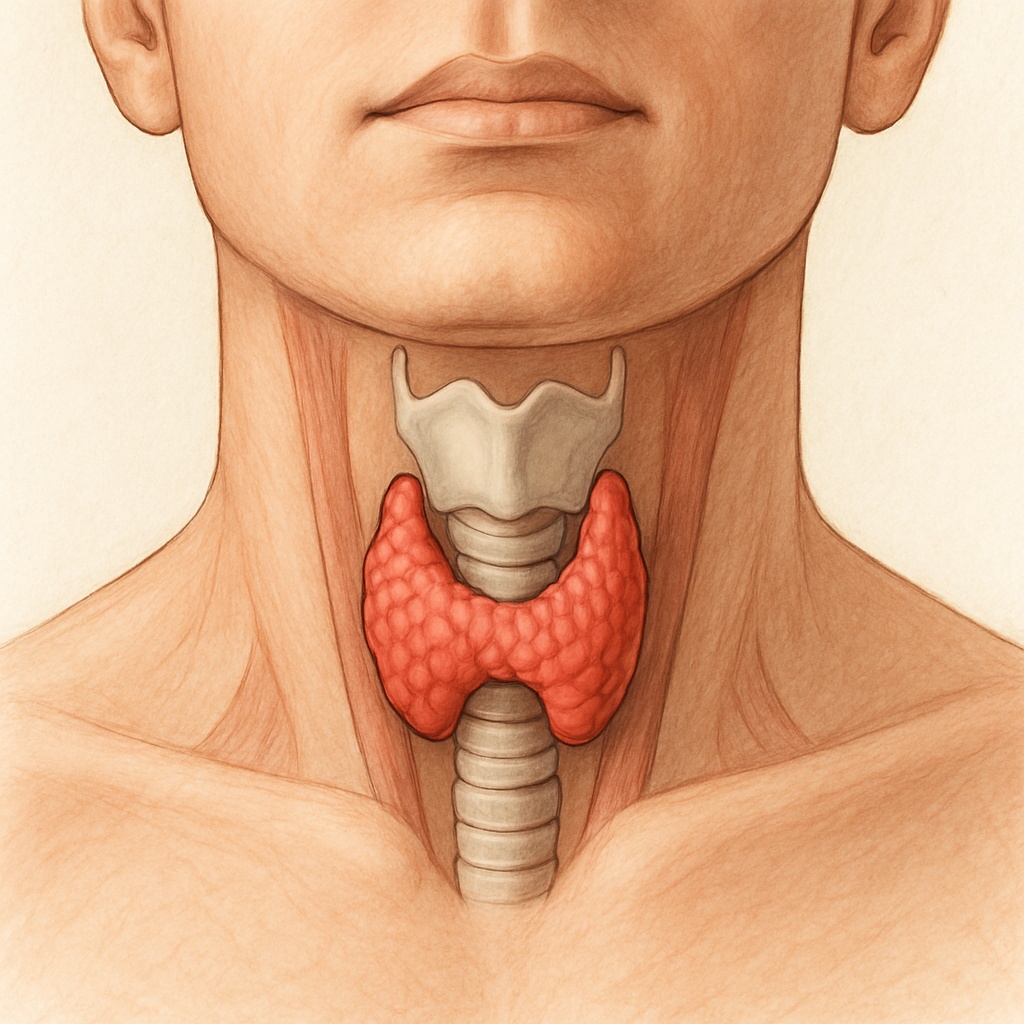
The thyroid gland — a small butterfly-shaped gland at the base of the neck — produces thyroxine (T4) and triiodothyronine (T3), hormones that regulate the metabolism of every single cell in the body. T4 is the main storage hormone, converted to the active T3 in the liver, gut and peripheral tissues. T3 drives energy production, temperature regulation, cognitive function, mood, heart rate, testosterone production and body composition. Although thyroid disorders affect men at about one-fifth the rate of women, they are significantly underdiagnosed in men — and when missed, they commonly present as fatigue, low testosterone, depression or unexplained weight gain.

Thyroid Hormones & Markers Explained

TSH alone is not enough — here's what every thyroid marker means

Marker Source & Role Optimal Range Clinical Notes
TSH (Thyroid-Stimulating Hormone) Stimulates thyroid to produce T4 and T3 — rises when thyroid output is low, falls when it's high 1.0–2.5 mIU/L (lab range broader: 0.4–4.0) The primary screening test. Sensitive early marker — rises before T4 falls. Optimal range for symptomatic patients is narrower than standard lab reference.
Free T4 (Thyroxine) The main storage hormone — must be converted to T3 to become active. Reflects thyroid gland output capacity 15–23 pmol/L (lab-dependent) Low fT4 with elevated TSH = classical hypothyroidism. Normal fT4 with symptoms may indicate poor T4→T3 conversion.
Free T3 (Triiodothyronine) The active thyroid hormone — binds thyroid receptors in every cell. Drives metabolism, temperature, mood, energy 5.0–7.0 pmol/L (lab-dependent) Often not tested on standard panels — but most clinically relevant for symptoms. Low fT3 with normal TSH and fT4 = conversion problem.
Reverse T3 (rT3) Inactive T3 analogue that blocks thyroid receptors — produced in excess during chronic stress, illness, crash dieting Low is optimal; ratio fT3:rT3 > 20 considered healthy Elevated rT3 explains why some men are symptomatic despite 'normal' TSH and fT4 — their active T3 is being competitively blocked.
Anti-TPO Antibodies Marker of autoimmune thyroid attack — elevated in Hashimoto's thyroiditis (and sometimes Graves') < 35 IU/mL (negative) Can be elevated for years before TSH changes. Less common in men than women, but still significant — warrants monitoring every 6–12 months.
Anti-TG Antibodies Second autoimmune marker — anti-thyroglobulin. Elevated in a subset of Hashimoto's patients where Anti-TPO is normal < 40 IU/mL (negative) Some Hashimoto's patients have elevated anti-TG but normal anti-TPO — both should be tested when autoimmune disease is suspected.
The T4 → T3 Conversion Problem

Levothyroxine (T4) is the most prescribed thyroid medication — but T4 itself is inactive. It must be converted to T3 by deiodinase enzymes primarily in the liver and gut. A significant subset of men on levothyroxine have "normal" TSH but persistently feel unwell — because their T4→T3 conversion is impaired, often due to chronic stress and high cortisol.

What impairs conversion

Chronic stress (high cortisol), chronic inflammation, selenium deficiency, iron deficiency, very low calorie diets, gut dysbiosis, liver disease, and certain medications (beta-blockers, amiodarone)

Reverse T3 (rT3) shunting

Under stress or illness, T4 is diverted to inactive rT3 instead of active T3. rT3 competes with T3 at receptors — particularly relevant for men in high-stress occupations or overtraining

DIO2 gene variant

~15% of people carry a DIO2 polymorphism that impairs intracellular T4→T3 conversion — these individuals consistently respond better to combination T4+T3 therapy

Signs of poor conversion

Symptoms persist despite normal TSH on levothyroxine: fatigue, brain fog, cold intolerance, weight retention, low libido, depression — yet TSH and fT4 appear 'normal'

Testing for it

Check fT3 alongside TSH and fT4. fT3 in the lower third of range despite adequate fT4 suggests poor conversion. Elevated rT3 confirms the problem.

Treatment options

Adding liothyronine (T3) to levothyroxine, or switching to desiccated thyroid extract (T4+T3 natural combination). Addressing root causes: stress, selenium, iron, gut health

Why Thyroid Problems Are Missed in Men

Thyroid disorders are five to eight times less common in men than in women — which means they're rarely the first thing investigated. But this lower prevalence leads to chronic underdiagnosis, with men often waiting years for a correct diagnosis:

Symptoms attributed elsewhere

Fatigue, weight gain, low mood and reduced libido in men are typically attributed to stress, overwork, low testosterone or lifestyle — not thyroid dysfunction. TSH is rarely checked without specific suspicion.

Low T overlap

Hypothyroidism suppresses testosterone and mimics low T in every way. Many men are started on TRT without thyroid function ever being checked — missing the actual diagnosis.

Underscreening

Women receive far more routine thyroid screening than men, particularly around hormonal transitions. Men rarely have thyroid function included in standard health checks unless they specifically request it.

Thyroid cancer delayed diagnosis

Men are less likely to report neck lumps or changes and less likely to be investigated early. When diagnosed, men present at a more advanced stage than women on average.

Articles on Thyroid Hormones & Men's Health

View all

Latest Men's Health Mythbusters

View all

Thyroid Hormones and Men's Health: What You Need to Know

Thyroid disorders in men are far more common than most people — including many doctors — realise. While women are affected five to eight times more often, a significant number of South African men are living with undiagnosed hypothyroidism, their symptoms attributed to stress, ageing or low testosterone, when the underlying driver is a sluggish thyroid gland.

The thyroid gland produces two key hormones — thyroxine (T4), the inactive storage form, and triiodothyronine (T3), the biologically active form. T4 is converted to T3 in peripheral tissues including the liver, kidneys and muscles. T3 enters cells and regulates the rate of virtually every metabolic process: energy production, protein synthesis, heart rate, body temperature and cognitive function. When T3 is insufficient, these processes slow — and the effects cascade across every body system.

For men specifically, thyroid dysfunction has a direct impact on testosterone. Hypothyroidism reduces the production of sex hormone-binding globulin (SHBG), disrupts the hypothalamic-pituitary-gonadal (HPG) axis, and impairs the conversion of cholesterol to testosterone precursors. The result is that a man with untreated hypothyroidism may present with symptoms indistinguishable from hypogonadism — fatigue, low libido, muscle weakness, depression and cognitive slowing — and be prescribed testosterone therapy without the underlying thyroid problem ever being identified.

Hashimoto’s thyroiditis, the most common cause of hypothyroidism globally, is an autoimmune condition that affects men as well as women, though at lower rates. Men with other autoimmune conditions, a family history of thyroid disease, or symptoms of hormonal imbalance that don’t respond to standard treatment should have a thorough thyroid panel — not just a TSH — performed.

At HealthLab, we believe thyroid health is a cornerstone of men’s hormonal health that deserves the same attention as testosterone. If you’re experiencing persistent fatigue, unexplained weight gain, low mood or reduced libido that hasn’t responded to lifestyle changes or testosterone optimisation, a comprehensive thyroid assessment is an essential next step. Our professional directory connects you with HPCSA-registered endocrinologists and men’s health specialists across South Africa.