Vitamin C in SA Foods: Do You Need a Supplement?
Guava, morogo, and wild spinach can meet your daily vitamin C needs. Here's when SA foods are enough — and when a supplement actually helps.
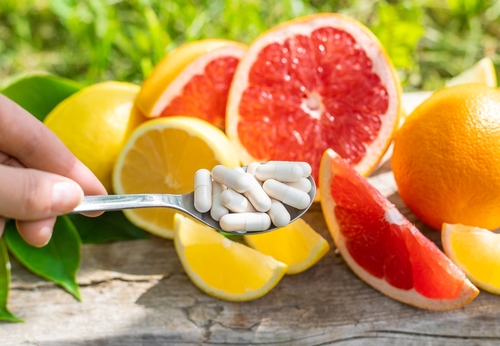
South Africans spend an estimated hundreds of millions of rands annually on vitamin C supplements — yet a single 100 g guava delivers roughly 230 mg of vitamin C, nearly three times the adult recommended daily intake. The gap between what’s already on many South African plates and what people believe they need is wide. Here’s how to close it with food first, and when a supplement genuinely earns its place.
The mega-dose myth: let’s deal with it upfront
The idea that very high doses of vitamin C prevent colds or cure infections has circulated since biochemist Linus Pauling popularised it in the 1970s. It was wrong then, and the evidence has not rescued it since. Pauling’s work was never replicated at the scale or rigour that would change clinical guidance, yet his claims seeded decades of supplement marketing.
Current evidence from Cochrane meta-analyses (the most rigorous summaries available) shows that taking 1,000 mg or more of vitamin C daily does not prevent colds in the general population. It may shorten cold duration by roughly half a day in adults — but only in people already taking it regularly before they get sick, not as a cure once symptoms appear. No SA-specific trial data exists on this question, but there is no biological reason South Africans would respond differently.
More importantly: your body absorbs vitamin C from food and supplements at a rate that falls sharply as doses climb. At 200 mg, absorption is close to 100%. At 1,000 mg, it drops to around 50%, and at 1,250 mg it falls to roughly 33%. The excess leaves in your urine. You are, quite literally, flushing money away.
What vitamin C actually does — and how much you need
Vitamin C (ascorbic acid) supports collagen synthesis, which keeps skin, tendons, and blood vessel walls intact. It enhances non-haem iron absorption by converting iron to a more soluble form in the gut — relevant for many South Africans who rely on plant-based iron sources. It also acts as an antioxidant in immune cells, and supports wound healing by accelerating collagen cross-linking at injury sites.
The South African Department of Health’s recommended dietary allowance is 75 mg per day for adult women and 90 mg per day for adult men. Smokers need an additional 35 mg daily because smoking accelerates ascorbate oxidation. Pregnant women are advised to get 85 mg daily, and breastfeeding women 120 mg. These figures align with the US Institute of Medicine values; no SAMRC data suggests South Africans need meaningfully different intakes.
The tolerable upper intake level is 2,000 mg per day. Above that, gastrointestinal distress — diarrhoea, cramping, nausea — becomes likely. Very high doses may also increase the risk of oxalate kidney stones in people predisposed to them.
SA foods that already cover your daily needs
This is where the conversation changes. South Africa’s traditional and everyday food landscape is remarkably well-stocked with vitamin C — often overlooked because the focus tends to fall on imported superfoods.
Guava is the standout. One medium guava (roughly 100 g) contains approximately 228 mg of vitamin C, based on the South African Food Composition Tables (SAFOODS database, MRC). That is more than double the adult daily requirement in a single fruit available at taxi ranks and spaza shops for under R5 in season.
Morogo (wild leafy greens, including species of Amaranthus and Corchorus) provides around 80–120 mg per 100 g depending on the species and preparation method. A generous 150 g serving of cooked morogo, common in rural and peri-urban households, can meet or exceed the adult RDA on its own.
Wild spinach (Amaranthus hybridus), closely related to morogo, comes in at roughly 70 mg per 100 g raw, according to SAFOODS data. Lightly steaming rather than boiling preserves significantly more vitamin C, since ascorbic acid leaches into cooking water and degrades with heat.
Red and yellow peppers are underused in SA cooking but widely available: 100 g of raw red pepper contains about 128 mg. Cabbage, a staple in many township households, provides around 36 mg per 100 g raw — less dramatic, but it contributes meaningfully when eaten in volume. Oranges sit at approximately 53 mg per 100 g. Tomatoes contribute about 14 mg per 100 g raw, modest individually but significant given how frequently they appear in SA cooking.
Amasi (fermented cow’s milk) contains negligible vitamin C on its own, but a meal built around amasi and morogo — common in many Zulu and Sotho households — can deliver well over 100 mg of vitamin C from the morogo component alone, while the amasi’s lactic acid environment may assist with overall nutrient absorption.
Pap, samp, and biltong are not meaningful sources of vitamin C, but they are frequently eaten alongside vegetables that are. The combination matters.
When does a supplement make sense?
For most South Africans eating a varied diet with regular access to fresh fruit and vegetables, a supplement adds little. But there are genuine exceptions.
Food insecurity is a real factor. Stats SA data from 2022 showed that approximately 20% of South African households experienced inadequate or severely inadequate access to food. In contexts where fresh produce is scarce or unaffordable, a basic 250 mg supplement costing around R30–R50 for a month’s supply provides meaningful nutritional insurance without the wasteful excess of high-dose products.
HIV and TB increase metabolic demand for antioxidant micronutrients including vitamin C. The SAMRC and Wits Reproductive Health and HIV Institute have documented micronutrient depletion in people living with HIV, and many public-sector ARV programmes include micronutrient supplementation guidance. If you are on ARV therapy or TB treatment, discuss supplementation with your prescribing clinician rather than self-supplementing at high doses, since some antioxidants interact with drug metabolism at pharmacological levels.
Malabsorption conditions — Crohn’s disease, post-gastric surgery states — reduce absorption efficiency. A dietitian’s input is warranted here.
Smokers who genuinely cannot quit should consider a modest daily supplement of 100–200 mg to offset the accelerated depletion that smoking causes.
Getting it through food: a practical day
A straightforward day of eating that comfortably meets the 90 mg adult male RDA:
- Breakfast: Two medium guavas with amasi (approximately 460 mg vitamin C — SAFOODS database)
- Lunch: Pap with a 150 g serving of cooked morogo and tomato relish (approximately 100–130 mg vitamin C — SAFOODS database; range reflects morogo species variation)
- Dinner: Grilled chicken with 80 g raw red pepper and 100 g raw cabbage as a side (approximately 138 mg vitamin C — SAFOODS database)
Daily total: roughly 700–730 mg — well above the RDA, well below the 2,000 mg upper limit, and achieved through foods that cost less than most supplement bottles.
For a more precise figure for your specific produce, the SAFOODS database (maintained by the South African Medical Research Council) is free to use online and lists nutrient values per gram for hundreds of SA foods.
Accessing advice and supplements in SA
Healthcare access
>
If you suspect vitamin C deficiency — symptoms include easy bruising, slow wound healing, bleeding gums, and fatigue — your first stop should be your nearest community health centre (CHC) or public clinic. A nurse or GP can assess your diet history and, where warranted, request a serum ascorbate test. Referrals to a registered dietitian are available through district hospitals in the public sector, though waiting times vary significantly by province.
>
In the private sector, a GP consultation runs roughly R600–R900 without medical aid, and a dietitian consultation approximately R800–R1,200 per session. Medical aids are required under Prescribed Minimum Benefits to cover diagnosis and initial management of nutritional deficiencies, but the definition of what qualifies can be narrow — check your benefit schedule or call your scheme directly.
>
A practical barrier worth naming: load-shedding disrupts cold storage at clinics and pharmacies in some areas, which can affect the quality of refrigerated supplements and fresh produce. Buy fresh produce frequently in smaller quantities rather than storing it through multiple outages. A R30–R50 basic vitamin C tablet from a pharmacy remains stable at room temperature and does not require refrigeration.
>
No referral is needed to see a pharmacist, who can advise on appropriate supplement doses and flag interactions with any chronic medications.
—
When to see a doctor or dietitian
– You have bleeding gums, unexplained bruising, or wounds that heal slowly
– You are pregnant, breastfeeding, or managing a chronic condition such as HIV, TB, or diabetes
– You take chronic medication and want to add any high-dose supplement
– You are considering giving supplements to a child
The bottom line
- Eat morogo, guava, or red pepper regularly — a single serving of any of these meets the adult daily requirement for vitamin C without supplementation.
- Skip high-dose supplements unless a clinician has identified a specific need; anything above 500 mg daily adds no proven benefit for most people and increases kidney stone risk with long-term use.
- Lightly steam rather than boil vitamin C-rich vegetables to retain the most ascorbic acid.
- If your diet is limited by food insecurity, a basic 250 mg supplement for around R30–R50 a month is a reasonable, affordable option.
- Check the SAFOODS database (SAMRC) for precise nutrient data on local foods before deciding whether you have a gap to fill.
Medical Disclaimer: This article is for informational purposes only and does not constitute medical advice. Always consult a qualified, HPCSA-registered healthcare professional for diagnosis and personalised treatment.
Connect with HPCSA-registered gynaecologists and endocrinologists who specialise in hormonal health.
Browse Professionals

