Pap, Samp & Rice: How SA Staples Affect Your Weight
Pap, samp, white rice, bread — can SA's favourite carbs fit a weight-management plate? Here's what the science actually says, with local context.
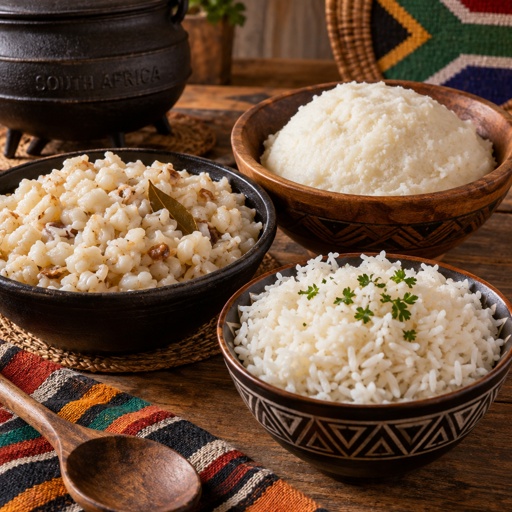
You’ve probably heard it: carbs make you fat. Cut the pap, ditch the rice, and definitely throw out the bread. But South Africa’s most-eaten staples have fed generations of people who didn’t have an obesity problem — until other things changed. Understanding what those things were tells you far more about weight management than any blanket carb ban.
The South African demographic and health surveys tracked by the South African Medical Research Council (SAMRC) show that overweight and obesity rates have climbed sharply since the 1990s — but the foods that rose most were ultra-processed products, not traditional pap or samp. That doesn’t make pap a superfood. It does mean the conversation needs more precision.
What actually drives weight gain?
Energy balance is the foundation. A consistent surplus of kilojoules — from any source — leads to fat storage. A 1,260–2,100 kJ daily deficit produces roughly 0.25–0.5 kg of fat loss per week for most adults. The source of those kilojoules matters less than their total, but it does matter for satiety, blood glucose control, and long-term adherence.
Carbohydrates raise blood glucose. The speed at which they do so — measured by the glycaemic index (GI) — affects how quickly hunger returns. High-GI foods spike glucose fast, trigger a larger insulin response, and tend to leave you hungry again sooner. Low-to-moderate GI foods release glucose more slowly, keeping you fuller for longer by blunting that insulin overshoot.
This is where your staple’s preparation method, portion size, and plate companions become the practical levers you can actually use.
The GI of pap, samp, rice, and bread compared
Stiff pap (stywe pap) made from white maize meal has a GI of around 71, which places it in the high-GI range. Soft pap (slap pap) is higher still — closer to 74–76 — because the thinner consistency means faster digestion. White rice sits at roughly 72. White bread is typically 70–75 depending on the brand. Samp, however, is a standout: its GI sits around 55–60, in the low-to-moderate range, because the whole dried corn kernels are more physically intact and digest more slowly.
No SA-specific GI database currently exists for all these foods in their locally prepared forms; the figures above draw on University of Sydney GI data and the South African Journal of Clinical Nutrition (SAJCN), which has published local food composition work. The practical takeaway: samp and whole-kernel maize products are the gentler option for blood glucose among traditional staples.
The resistant starch effect: why cooled pap behaves differently
Here is where cooking method makes a measurable difference. When starchy foods are cooked and then cooled, some of the starch recrystallises into a form called resistant starch — so named because it resists digestion in the small intestine and instead ferments in the colon, feeding beneficial gut bacteria and producing short-chain fatty acids.
Resistant starch has a functional GI-lowering effect. A study published in the European Journal of Clinical Nutrition found that cooling cooked starch reduced its glycaemic response by roughly 25–35% compared with eating it hot. For pap specifically, this means yesterday’s cold pap from the fridge is genuinely less glycaemically disruptive than a fresh hot bowl. Reheating partially preserves this benefit, but not entirely — cold or room-temperature is best.
This is relevant for South Africans dealing with load-shedding: pap that sits and cools because you can’t reheat it may actually be the version that causes the smaller glucose spike. Small practical silver lining.
Portion size is doing most of the work
A typical plate of stiff pap at a restaurant or family meal can weigh 300–400 g, delivering 1,400–1,900 kJ from the pap alone before any sides are added. A standard 150 g cooked-weight portion delivers around 700–750 kJ — enough to anchor a meal without dominating the energy budget.
The same logic applies to rice. A 180 g cooked serving (roughly one teacup) provides about 950 kJ. Portions commonly served at home or in a takeaway container are often 300 g or more, pushing that to 1,600 kJ from a single component.
Reducing pap from a 400 g serving to a 200 g serving saves roughly 900–950 kJ per meal without eliminating the food. Over a week of daily meals, that single adjustment creates a deficit equivalent to losing approximately 100–120 g of fat — without touching anything else on the plate.
What you eat with your staple matters as much as the staple itself
Adding protein and vegetables to a carbohydrate meal slows gastric emptying and blunts the glucose spike. At least 1.2 g of protein per kg of body weight per day reduces muscle loss during a kilojoule deficit — meaning a 75 kg person needs roughly 90 g of protein daily. For context, 100 g of grilled chicken provides about 31 g of protein; 100 g of biltong provides roughly 45–50 g.
Morogo (wild spinach) and other dark leafy greens eaten alongside pap add fibre that slows digestion and contributes to satiety without meaningful kilojoules. Amasi (fermented milk) as a side provides protein and probiotics — about 6–8 g of protein per 100 ml — and its mild acidity may also modestly lower the overall GI of the meal.
A practical plate target: fill half the plate with vegetables or morogo, a quarter with your staple at a controlled portion, and a quarter with a protein source. This structure doesn’t require expensive ingredients or imported foods.
Bread: the staple that deserves closer attention
Commercially produced white bread in South Africa is highly processed, has a high GI, and is easy to overconsume because it is portable and ubiquitous. A single slice of standard white bread (±40 g) provides around 380–420 kJ. Two slices at breakfast plus two at lunch adds up to 1,520–1,680 kJ from bread alone, before any spreads.
Whole-wheat or seed bread has a GI of roughly 53–58 and provides more fibre — slowing digestion and increasing satiety. If you eat bread daily, swapping from white to whole-wheat is one of the highest-return, lowest-disruption changes available. The cost difference is modest: roughly R5–R10 more per loaf at most retailers.
Hypertension, diabetes, and the SA comorbidity picture
South Africa carries a heavy burden of type 2 diabetes and hypertension, both of which are linked to — and worsened by — blood glucose dysregulation. The SAMRC estimates that approximately 4.2 million South Africans are living with diabetes, with many more undiagnosed. High-GI diets eaten consistently over years contribute to insulin resistance, which accelerates the progression from prediabetes to type 2 diabetes.
For people already living with HIV — roughly 7.8 million South Africans, according to the NICD — antiretroviral therapy (ART) can increase insulin resistance and visceral fat accumulation, making blood glucose management through diet especially relevant. This is not widely discussed in mainstream nutrition content, and it should be.
Getting help and accessing a dietitian
When to see a healthcare provider
Speak to your GP or a registered dietitian if you have type 2 diabetes, prediabetes, or hypertension and want personalised carbohydrate guidance. Pregnant women should not follow a kilojoule-restricted diet without clinical supervision. If you are on ART or chronic medication, dietary changes should be discussed with your treating doctor.
In the public sector: Start at your nearest community health centre (CHC). Dietitian services exist at district and regional hospitals, though waiting times vary. Ask your clinic sister for a dietitian referral — it is available through the public system at no direct cost.
In the private sector: An initial consultation with a registered dietitian costs approximately R800–R1,500 depending on location and experience. Follow-up sessions typically range from R500–R1,000.
Medical aid: Dietitian consultations fall under Prescribed Minimum Benefits (PMBs) when the referral is linked to a PMB condition such as type 2 diabetes. Check with your medical aid scheme whether a GP referral is required to access this benefit. Many schemes cover two to four dietitian visits per year on their chronic disease management programmes.
Practical barrier: Transport and load-shedding affect appointment-keeping and telehealth access. Several registered dietitians now offer WhatsApp or video consultations — ask specifically when booking.
No local SA data currently exists on the cost-effectiveness of dietitian-led intervention for weight management in the public sector specifically; this is a gap the SAMRC has flagged for future research.
Bottom line
- Reduce your portion of pap or rice before eliminating it — dropping from a 400 g to a 200 g serving saves roughly 950 kJ per meal.
- Choose samp when you can: its GI of 55–60 is meaningfully lower than stiff pap (GI ≈ 71) or white rice (GI ≈ 72).
- Cool your pap before eating when practical — resistant starch formation can reduce the glycaemic response by up to 35%.
- Build the plate first: half vegetables (morogo counts), a quarter protein (biltong, chicken, fish, amasi), a quarter staple.
- Swap white bread for whole-wheat — the GI drops from ≈72 to ≈55 and the cost difference is under R10 per loaf.
Medical Disclaimer: This article is for informational purposes only and does not constitute medical advice. Always consult a qualified, HPCSA-registered healthcare professional for diagnosis and personalised treatment.
Connect with HPCSA-registered gynaecologists and endocrinologists who specialise in hormonal health.
Browse Professionals

