SA Runners: Why You Keep Getting Injured in the Same Spot
Recurring running injuries aren't bad luck — they're a movement signal. SA runners, here's what your body is actually telling you and how to fix it.
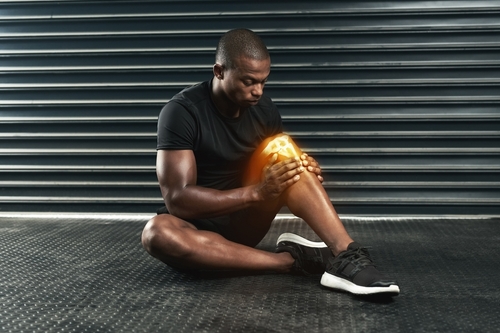
You treat the injury. You rest. You come back. Six weeks later — or six months later — it’s back in exactly the same place. Your IT band, your Achilles, your plantar fascia, your patella tendon. Same spot, same pain, same confusion. This isn’t a streak of bad luck. Your body is repeating a pattern, and until you identify that pattern, the injury will keep repeating with it.
The scale of the problem in SA
Recreational running in South Africa has grown steadily over the past decade. The Comrades Marathon alone had over 25,000 entrants in 2024, and tens of thousands more participate in Two Oceans, Soweto Marathon, and hundreds of local parkruns every weekend. With that volume comes a significant injury burden.
No local dataset comprehensively tracks recreational running injuries the way the SAMRC tracks non-communicable disease, but sports medicine clinicians at institutions such as the Sports Science Institute of South Africa (SSISA) in Cape Town have documented that between 50% and 80% of distance runners sustain at least one overuse injury per year — a figure consistent with international prospective studies. The most common sites are the knee (particularly iliotibial band syndrome and patellofemoral pain), the Achilles tendon, the plantar fascia, and the tibial stress complex (shin splints).
What the data don’t capture is how many of those runners are treating the same injury on a loop.
It’s a movement problem, not a tissue problem
When physiotherapists and sports scientists talk about overuse injuries, they distinguish between the site of pain and the source of the problem. Your inflamed Achilles is the site. The source is almost always a load management failure, a movement pattern fault, or a combination of both.
Research published in the British Journal of Sports Medicine found that runners who altered their running gait — specifically increasing step rate by roughly 5–10% — reduced the load on the knee by up to 20%. That’s not a trivial number: for a 70 kg runner covering 10 km, the knee absorbs roughly 1.5 times body weight with every stride. A 20% reduction means significantly less cumulative stress over thousands of repetitions per session.
No equivalent SA trial exists at the time of writing, but SSISA biomechanics researchers have published on gait retraining principles applicable to local runners across similar terrains and conditions.
The key point: if your gait has a fault — a hip drop, a crossover stride, an overstriding footstrike — every kilometre you run reinforces that fault and accumulates stress at the same anatomical point. Rest removes the acute pain. It does not remove the pattern.
The three most common culprits
1. Overstriding
When your foot lands well ahead of your centre of mass, your leg acts as a brake with every step. This increases impact loading at the knee and tibial shaft. A simple cue: your foot should land roughly under your hip, not in front of it. Cadence (steps per minute) is a useful proxy — most recreational runners benefit from targeting 170–180 steps per minute, which naturally shortens stride length and moves the footstrike back.
2. Contralateral hip drop (Trendelenburg pattern)
If your hip drops on the opposite side when you’re in single-leg stance — which is every stride — your iliotibial band and hip abductors are under-functioning. This pattern is strongly associated with both IT band syndrome and patellofemoral pain. You can check it crudely by filming yourself from behind while running on a treadmill or flat road.
3. Too much, too soon
The widely cited 10% rule (don’t increase weekly mileage by more than 10%) is a useful starting point but is not a guarantee. What matters more is acute to chronic workload ratio — the ratio of your training load this week compared to your rolling four-week average. A ratio above 1.5 substantially raises injury risk. If you ran 30 km last week after averaging 18 km over the previous four weeks, your tissue hasn’t adapted to meet the demand.
SA-specific pressures that make this worse
South African runners face contextual stressors that compound training-load problems. Load-shedding disrupts sleep — and poor sleep impairs tendon and muscle repair, since the majority of connective tissue remodelling happens during slow-wave sleep. A runner sleeping five to six broken hours during stage-4 load-shedding is not recovering at the same rate as one sleeping eight uninterrupted hours, even on identical training volumes.
The SA disease-burden context also matters. Hypertension affects roughly 46% of South African adults, and many runners in their 40s and 50s are either managing hypertension or are insulin-resistant. Both conditions impair tendon vascularity and collagen synthesis, making overuse injury more likely and recovery slower. If you’re managing either condition, this is a reason to be more conservative with load increases, not less.
What actually fixes a recurring injury
Get a running gait assessment. Not a generic gym assessment — a running-specific one where someone watches you run, ideally with video. Sports physiotherapists and biokineticists trained in running analysis can identify the patterns that a rest-and-return approach will never address. SSISA offers this service; most private sports physiotherapy practices in Johannesburg, Cape Town, Durban, and Pretoria do too.
Strengthen the right muscles. For knee and IT band problems, hip abductor and glute medius strength is typically undertrained. For Achilles and plantar fascia issues, heavy slow-resistance calf training (three sets of 15 repetitions with a two-second lowering phase, three times per week) has strong evidence behind it — a 2015 RCT by Beyer et al. in the American Journal of Sports Medicine found it matched eccentric training for Achilles tendinopathy outcomes, and it’s more practical to maintain.
Use a training log. A basic notes app or free platforms like Strava let you track weekly load and calculate your acute-to-chronic ratio. If you can’t see the numbers, you can’t manage them.
Don’t skip the return-to-run protocol. Coming back from two weeks off is not the same as coming back at the mileage you left at. Most physiotherapists recommend dropping to 60–70% of pre-injury volume and rebuilding over three to four weeks.
Getting help: access and cost in SA
A single running gait assessment with a sports physiotherapist in private practice typically costs between R800 and R1,500, depending on the clinic and city. A follow-up biokineticist session for corrective exercise runs R450–R700 per session.
Medical aid members should check whether their plan covers physiotherapy sessions under chronic disease or general benefits — most open schemes and some restricted schemes cover six to 12 sessions annually, and musculoskeletal physiotherapy is a Prescribed Minimum Benefit (PMB) condition under certain diagnostic categories. Check your benefit schedule before assuming coverage.
In the public sector, district-level community health centres (CHCs) can refer patients with persistent musculoskeletal injuries to physiotherapy services at district or regional hospitals. Wait times are longer than private, but the service exists and is free at the point of care. If you are in a metropolitan area, ask your CHC for a referral to the physiotherapy department at your nearest public hospital.
A practical barrier for many runners outside major cities is access to practitioners with running-specific expertise. Telehealth video consultations have expanded since 2020 and some SA-based sports physios now offer remote gait review using smartphone footage — worth asking about before assuming you need to travel.
—
When to see a healthcare professional
See a physiotherapist or sports medicine doctor if:
– Your pain persists beyond two weeks despite rest
– The same injury has returned more than once
– You have bone-site tenderness that worsens with impact (possible stress fracture — do not run through this)
– You are managing diabetes, hypertension, or are HIV-positive, as healing timelines and loading tolerance may differ
– Pain is sudden, severe, or accompanied by swelling in the calf (rule out deep vein thrombosis)
Bottom line
- Film your running gait from behind and the side — hip drop and crossover stride are invisible without video.
- Track your weekly load and keep your acute-to-chronic workload ratio below 1.5 when building mileage.
- Strengthen your glutes and calves with targeted resistance work at least twice a week — not just during injury, but as ongoing maintenance.
- Rest treats the site; gait and load work treats the source — you need both to stop the cycle.
- Get a running-specific physiotherapy assessment if the same injury has returned more than once; a general rest-and-return approach is not enough.
Medical Disclaimer: This article is for informational purposes only and does not constitute medical advice. Always consult a qualified, HPCSA-registered healthcare professional for diagnosis and personalised treatment.
Connect with HPCSA-registered gynaecologists and endocrinologists who specialise in hormonal health.
Browse Professionals

