Why SA Athletes Ignore Mental Training — And Pay for It
South African athletes train hard but skip psychological skills. Here's the evidence that visualisation, self-talk, and arousal control are real performance tools.
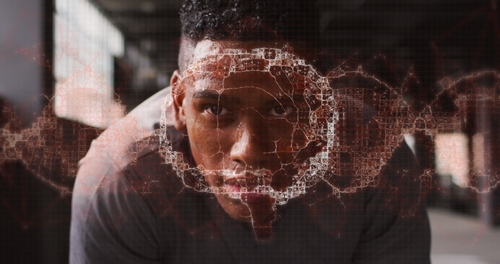
You train six days a week. You track your macros, log your kilometres, and periodise your strength blocks. Then race day arrives and you fall apart under pressure — or your training is derailed for the third week in a row by a four-hour loadshedding window — and you wonder what went wrong. The problem is probably not your legs. Research consistently shows that psychological skills training (PST) produces real, measurable performance gains, yet most South African club athletes never touch it.
The “soft skills” myth has a cost
The idea that mental preparation is for elite athletes, or that discussing it signals weakness, is deeply embedded in South African club and amateur sport culture. Coaches often treat it as a luxury — something the Springboks or Proteas can afford, not the Saturday-morning runner or provincial U19 hockey player.
This framing carries a price. A 2019 review published in the South African Journal of Sports Medicine found that psychological factors — including confidence, attentional focus, and arousal regulation — were among the strongest predictors of performance variability in sub-elite athletes, a group that includes the vast majority of competitive South Africans. The gap between physical preparation and psychological preparation is not a small one: the review estimated that mental factors account for between 30% and 50% of performance outcome in skill-dependent sports.
To put that in concrete terms: if your 10 km time is 52 minutes, improving physical fitness alone might get you to 48 minutes. Closing the psychological preparation gap could shave off another 90 seconds to two minutes on top of that — without a single extra kilometre run.
What psychological skills training actually is
PST is not meditation retreats or motivational posters. It is a set of evidence-based techniques with specific mechanisms, trained the same way you train a squat or a swim stroke. The three most studied and most applicable for club athletes are:
Visualisation (mental imagery)
You rehearse a performance scenario in your mind with as much sensory detail as possible — the sound of the crowd, the weight of the ball, the feeling of your foot strike. Functional MRI studies show that vivid motor imagery activates the same motor cortex pathways as physical execution. A 2022 meta-analysis in Psychology of Sport and Exercise found that structured imagery programmes improved performance outcomes in strength, endurance, and fine motor skill tasks by an average of 12% compared to physical-only training groups — roughly equivalent to adding two extra training sessions per week.
Self-talk
Deliberate internal dialogue used before or during performance. Instructional self-talk (“drive your elbows back”) maintains technical form under fatigue. Motivational self-talk (“you’ve done this before”) manages effort perception. A 2021 systematic review found that self-talk interventions reduced perceived exertion by approximately 8–10% in endurance events, allowing athletes to sustain effort for longer before reaching subjective exhaustion.
Arousal control
The ability to deliberately raise or lower physiological activation to match a task’s demand. Too calm before a sprint start is as harmful as too anxious before a penalty kick. Box breathing — a four-second inhale, four-second hold, four-second exhale, four-second hold — has been shown to reduce cortisol and heart rate within five minutes, making it one of the most practical pre-competition tools available. No equipment, no cost.
SA sport psychology: what access looks like
Psychological skills training is not widely available in public sport development pathways in South Africa. Most provincial sport councils and school sport programmes have no embedded sport psychologist, and the South African Sports Medicine Association (SASMA) has noted the shortage of trained practitioners as a structural gap in athlete support.
Private sector: A registered sport psychologist in private practice charges between R850 and R1,500 per session in major urban centres (Johannesburg, Cape Town, Durban). A standard six-week PST block — six to eight sessions — would cost R5,100 to R12,000 out of pocket. Most medical aids do not cover sport psychology under Prescribed Minimum Benefits (PMBs) unless there is a diagnosed anxiety or adjustment disorder, which means you are likely paying cash.
Lower-cost routes: Several university sport science departments — including those at the University of Pretoria, Stellenbosch University, and the University of the Western Cape — offer sport psychology consultations through their clinical training programmes at significantly reduced rates, sometimes as low as R200–R350 per session. These are supervised by registered practitioners and are clinically sound.
Self-directed entry point: The South African Depression and Anxiety Group (SADAG) publishes basic cognitive and relaxation resources online that are relevant to arousal control. For athletes not dealing with a clinical condition, the freely available resources from SASCOC’s athlete wellness programme are a practical starting point before investing in private sessions.
When to see a sport psychologist or healthcare provider
Speak to a registered sport psychologist or your GP if you experience: persistent performance anxiety that interferes with daily functioning; avoidance of competition due to fear of failure; symptoms of burnout (exhaustion, detachment, reduced performance over more than two weeks); or any mental health concern affecting quality of life. SADAG helpline: 0800 567 567 (toll-free, 24 hours).
How to start this week — no psychologist required
You do not need to book a private session to begin. These three entry points require only time and consistency:
- Add five minutes of imagery to your warm-up. Sit quietly, close your eyes, and walk through your session or event in real time. Be specific: the feel of the surface, the sound, your technical cues. Do this three times per week for four weeks before assessing whether your sense of preparation has changed.
- Write two self-talk cues. Choose one instructional (“shoulders down, cadence up”) and one motivational (“I train for this”). Practise saying them aloud during training so they become automatic under pressure.
- Use box breathing before every session starts. Four seconds in, four seconds hold, four seconds out, four seconds hold. Repeat five times. This takes under three minutes and measurably lowers pre-session cortisol — which means you begin training in a better physiological state to adapt.
Bottom line
– Mental skills training produces performance gains equivalent to adding training volume — without the injury risk or recovery cost.
– Visualisation, self-talk, and arousal control are evidence-based techniques with specific mechanisms, not motivational fluff.
– Load-shedding disruptions make PST a practical necessity for South African athletes, not just a theoretical advantage.
– Private sport psychology costs R850–R1,500 per session; university training clinics offer supervised sessions from R200.
– Start with five minutes of imagery and box breathing this week — no specialist needed to begin.
Medical Disclaimer: This article is for informational purposes only and does not constitute medical advice. Always consult a qualified, HPCSA-registered healthcare professional for diagnosis and personalised treatment.
Connect with HPCSA-registered gynaecologists and endocrinologists who specialise in hormonal health.
Browse Professionals

